



Bradford
West Yorkshire

From back-to-back terraces to flats in old mills, what causes damp and mould in Leeds homes and where tenants can get repairs done.
Including Headingley, Horsforth, Armley, Chapeltown, Morley, Pudsey, Otley and Wetherby
Who puts damp right depends on whether you rent or own. Choose your situation.
Your landlord has to fix damp caused by disrepair, such as leaks, broken gutters or failed pointing. Since 1 May 2026 the Renters' Rights Act has ended no-fault evictions, so asking for a repair shouldn't put your home at risk.
Tell your landlord or letting agent about the damp in writing, by email, letter or text, and add photos. Keep a copy of what you send.
Give them about 14 days to reply and arrange the work. Chase them once if you hear nothing.
If the repair still isn't done, contact Leeds City Council's Private Rented Housing team. They can inspect the home and make the landlord put it right.
Who to contact
Email prs.housing@leeds.gov.uk
Damp in a home you own is yours to sort out, so the first job is finding the real cause. A treatment sold before anyone has found the cause is often money wasted.
Check the simple things first: gutters and downpipes, ground levels against the walls, blocked airbricks, and whether rooms get enough heat and air.
If the cause still isn't clear, get an independent damp survey before paying for any treatment. Damp proofing a wall that has a leak or condensation problem won't fix it.
If heating costs are part of the problem, check what help you could get with insulation and heating.
Who to contact
Free advice on insulation, heating and grants you may qualify for.
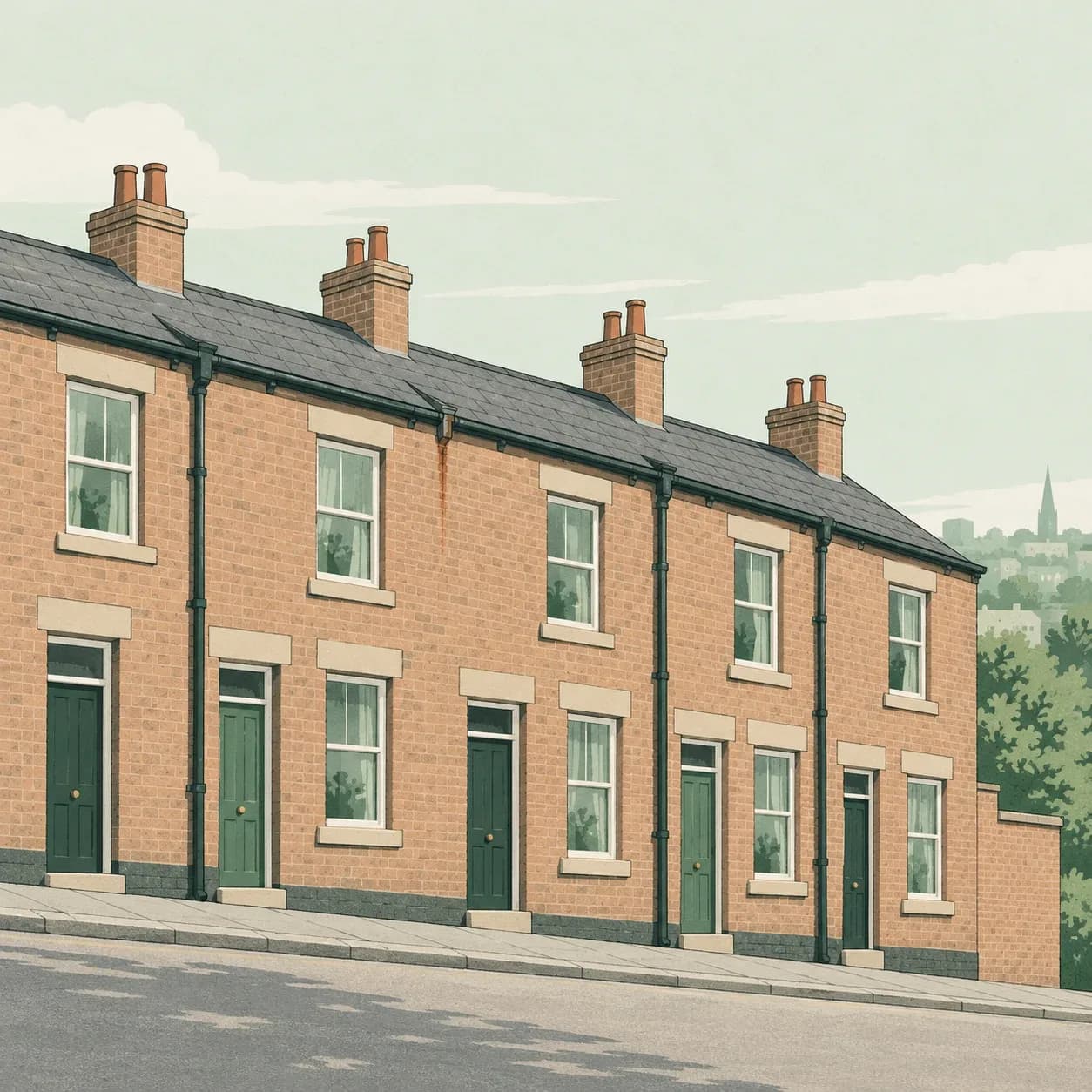
Leeds still has thousands of back-to-back terraces, mostly in Holbeck, Harehills, Burley and Armley. They share walls on three sides, so each house has one outside wall and very little through air. That makes them prone to condensation, especially in the back bedroom, and it is worth reading about why black mould keeps coming back on bedroom walls before blaming the walls themselves.
Around the city centre and along the Aire, old mills and warehouses have been turned into flats. Thick brick walls, new insulation and small window openings can leave cold corners where mould starts. Out in Horsforth, Pudsey and Wetherby there are more 1930s semis and post-war estates, where cavity walls, insulation and blocked airbricks are the usual suspects.
Most of Leeds is built on sloping ground, so water running off a hill can sit against the back wall of a terrace. Many older houses also have gutters and downpipes that have been patched for decades. A damp patch high on a wall that gets worse after rain usually points to leaking gutters and downpipes rather than rising damp.
Look at when the damp appears. Wet windows every morning and mould in corners point to condensation. A patch that grows after heavy rain points to water getting in from outside. If you can't tell, a damp survey finds the cause before anyone sells you a treatment.
Two-up, two-down houses sharing walls on three sides, built in their tens of thousands before 1937.
Look out for: Condensation and mould in the back rooms, because air can't flow through the house. Fans and steady heating matter more than in most homes.
Victorian and Edwardian brick terraces with solid walls and slate roofs, across inner Leeds.
Look out for: Worn pointing, cracked render and leaking gutters letting rain into solid brick walls.
Flats inside old industrial buildings near the centre and along the river.
Look out for: Cold corners and window reveals where new insulation stops, and steam with nowhere to go.
17%of homes in Leeds were built before 1919. Across England it is 20%.
Source: Valuation Office Agency, Council Tax stock of properties (opens in a new tab), March 2026
21.8%of households in Leeds rent from a private landlord. Across England it is 20.5%.
Source: Census 2021, ONS table TS054 (opens in a new tab), 2021
20.4%of households in Leeds rent from a council or housing association. Across England it is 17.1%.
Source: Census 2021, ONS table TS054 (opens in a new tab), 2021
Free, independent organisations that can help with housing problems, money and keeping warm. They aren't connected to Spore Shield.
Free advice on housing, money and energy problems.
Phone 0808 278 7878Free housing advice for renters, including what to do when a landlord won't do repairs.
Phone 0808 800 4444A tenants' union with members in Leeds, campaigning on repairs and conditions in rented homes.
Help with energy bills, debts with suppliers and staying warm for less.
Phone 0800 448 0721Local details checked October 2026.
They tend to get more condensation, because each house has only one outside wall and air can't pass through. That isn't the same as the walls being wet from outside. Good extractor fans, steady low heat and drying washing outdoors or with a dehumidifier make a big difference.
Condensation can come from how a home is used, but it is often made worse by things the landlord is responsible for, such as broken fans, poor heating or cold walls. Report it in writing, and if it isn't dealt with, the council's Private Rented Housing team can inspect.
True rising damp is less common than people think. In Leeds terraces, damp low on walls is more often caused by raised paths, leaking downpipes or condensation behind furniture. A survey that checks these first saves money on injections you may not need.
A professional damp and mould survey with a written report provided for £50.
About Damp & Mould SurveyA three-stage initial damp and mould cleaning and treatment process, including a discounted survey and written report.
About Damp & Mould Cleaning & TreatmentWest Yorkshire
West Yorkshire

West Yorkshire

North Yorkshire and York
I rent from the council or a housing association
If you rent from the council or a housing association, your landlord has to deal with damp and mould, and the law now sets deadlines for it.
Report the damp or mould to Leeds City Council, or the housing association that runs your home and ask for a reference number. Photos help.
Under Awaab's Law your landlord must look into significant damp and mould within 10 working days, and start any safety work within 5 working days after that. Emergency hazards are faster.
If it isn't put right, use your landlord's complaints process. If that doesn't work, you can go to the Housing Ombudsman.
Who to contact
For council tenants. Email dandmteam@leeds.gov.uk with photos.
If your landlord's own complaints process hasn't put it right.