




Blackburn
Lancashire

Over four in ten Burnley homes were built before 1919. Cold solid walls, condensation and raised paths, and who to call from Calico to the council.
Including Padiham, Worsthorne, Cliviger, Hapton and Briercliffe
Who puts damp right depends on whether you rent or own. Choose your situation.
Your landlord has to fix damp caused by disrepair, such as leaks, broken gutters or failed pointing. Since 1 May 2026 the Renters' Rights Act has ended no-fault evictions, so asking for a repair shouldn't put your home at risk.
Tell your landlord or letting agent about the damp in writing, by email, letter or text, and add photos. Keep a copy of what you send.
Give them a reasonable time to reply and arrange the work. Chase them once if you hear nothing.
If the repair still isn't done, contact Burnley Council using its online disrepair form. They can inspect the home and make the landlord put it right.
Who to contact
Use the Report a Disrepair form linked from the page.
Damp in a home you own is yours to sort out, so the first job is finding the real cause. A treatment sold before anyone has found the cause is often money wasted.
Check the simple things first: gutters and downpipes, ground levels against the walls, blocked airbricks, and whether rooms get enough heat and air.
If the cause still isn't clear, get an independent damp survey before paying for any treatment. Damp proofing a wall that has a leak or condensation problem won't fix it.
If heating costs are part of the problem, check what help you could get with insulation and heating.
Who to contact
Free advice on insulation, heating and grants you may qualify for.
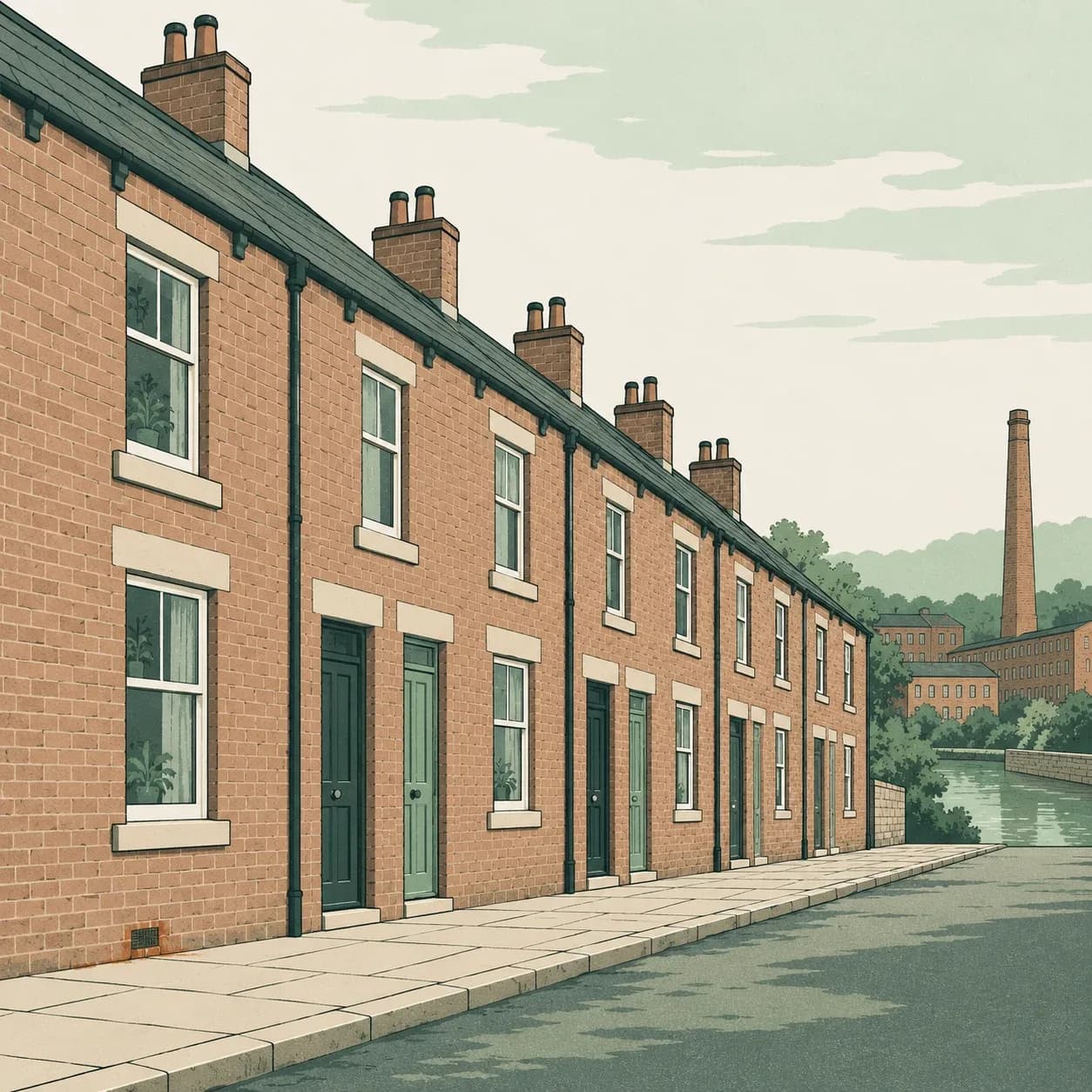
Burnley grew fast with the cotton mills, and its terraces still make up a big share of its homes. More than four in ten homes in the borough were built before 1919, over twice the share across England. Most are brick or stone terraces with solid walls, front doors on the street and small yards behind.
Solid walls are colder than cavity walls, so condensation forms on them more easily, especially behind wardrobes and in corners. Mould behind wardrobes and sofas is one of the most common things people in older terraces ask about. Keeping rooms warm enough is part of the answer, and that is harder when bills are high.
Burnley sits under the moors, and the wind and rain off them hit exposed gable ends hard. Many terraces have had their pavements and yards raised over the years, which can bring the ground up above the damp course. Blocked airbricks and damp timber floors is a common result in houses with suspended floors.
Look along the bottom of the front and back walls. If the pavement, yard or path is close to or above the inside floor level, or the airbricks are covered, that is the first thing to deal with.
Two-up, two-down and larger terraces in brick or stone, built for mill workers before 1919.
Look out for: Condensation on cold solid walls, mould behind furniture, and raised paths against the front wall.
Older homes with wooden ground floors over a ventilated void.
Look out for: Blocked or buried airbricks, a musty smell and soft floorboards.
Brick semis and terraces, many now run by Calico Homes.
Look out for: Condensation in bedrooms and bathrooms with weak extractor fans.
43%of homes in Burnley were built before 1919. Across England it is 20%.
Source: Valuation Office Agency, Council Tax stock of properties (opens in a new tab), March 2026
24.3%of households in Burnley rent from a private landlord. Across England it is 20.5%.
Source: Census 2021, ONS table TS054 (opens in a new tab), 2021
15.6%of households in Burnley rent from a council or housing association. Across England it is 17.1%.
Source: Census 2021, ONS table TS054 (opens in a new tab), 2021
Free, independent organisations that can help with housing problems, money and keeping warm. They aren't connected to Spore Shield.
Free advice on housing, money, benefits and energy for Burnley and Pendle.
Phone 0808 278 7975Free housing advice for renters, including what to do when a landlord won't do repairs.
Phone 0808 800 4444Links people with local voluntary groups and community support.
Local details checked October 2026.
Solid outside walls are cold, and furniture pushed against them stops warm air reaching the surface. Moist air condenses there and mould grows. Moving furniture a few inches away from the wall and keeping the room steadily warm usually helps.
Solid-walled homes lose more heat, and that does drive condensation. Check what help you could get with insulation and heating through GOV.UK's energy advice service, and ask Citizens Advice East Lancashire about bills and grants.
Report it to Calico Homes on 01282 686300. As a housing association it must investigate significant damp and mould under Awaab's Law, and if it doesn't, you can complain and then go to the Housing Ombudsman.
A professional damp and mould survey with a written report provided for £50.
About Damp & Mould SurveyA three-stage initial damp and mould cleaning and treatment process, including a discounted survey and written report.
About Damp & Mould Cleaning & Treatment

I rent from the council or a housing association
If you rent from the council or a housing association, your landlord has to deal with damp and mould, and the law now sets deadlines for it.
Report the damp or mould to Calico Homes, which runs most of the homes once owned by the council, or your own housing association and ask for a reference number. Photos help.
Under Awaab's Law your landlord must look into significant damp and mould within 10 working days, and start any safety work within 5 working days after that. Emergency hazards are faster.
If it isn't put right, use your landlord's complaints process. If that doesn't work, you can go to the Housing Ombudsman.
Who to contact
Contact centre open 9am to 5pm, Monday to Friday.
If your landlord's own complaints process hasn't put it right.